Your Brain Is Running at Full Capacity Right Now. The '10 Percent' Myth Sells Us Short — and the Real Science Is Stranger.
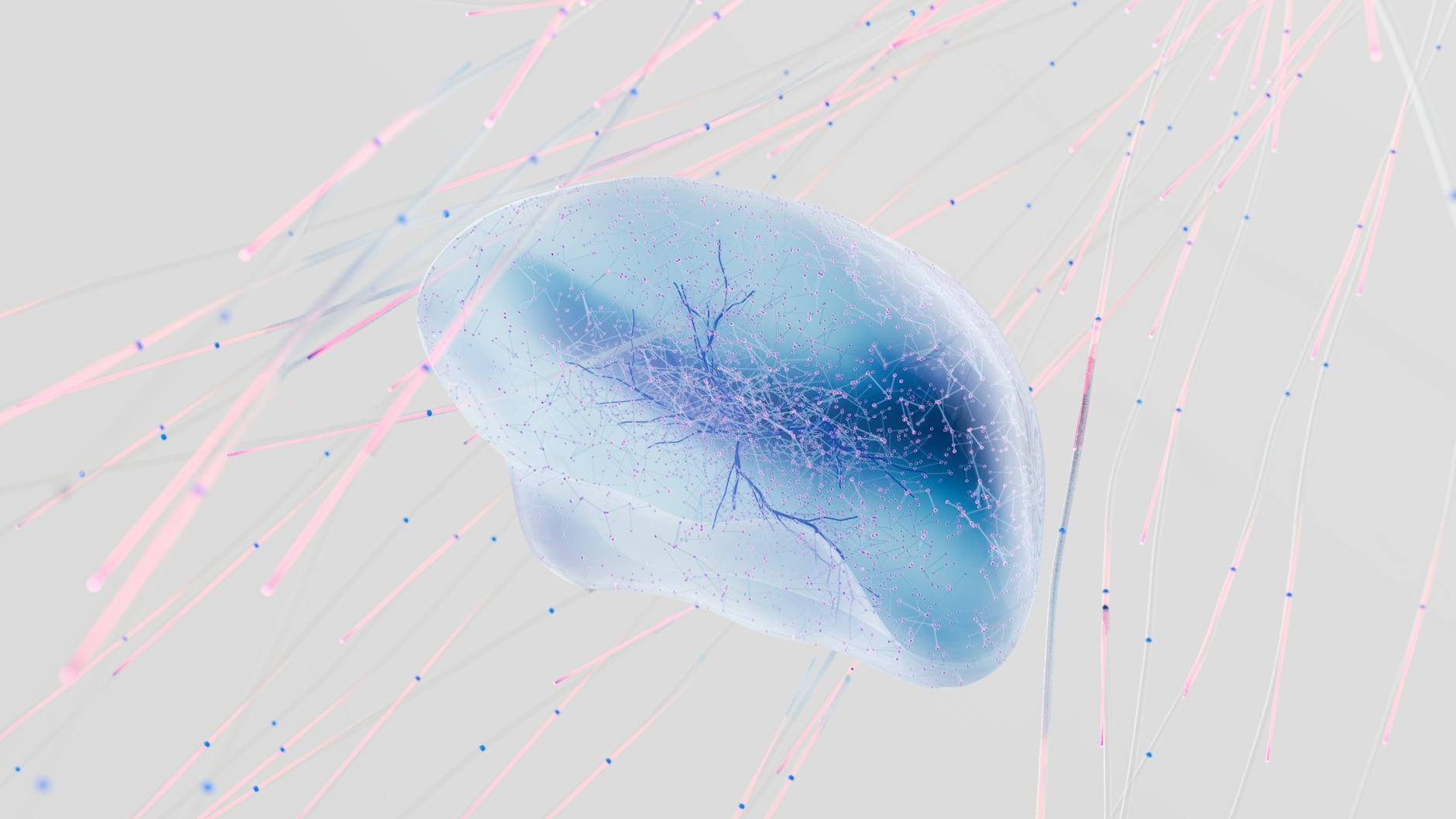
Your Brain Is Running at Full Capacity Right Now. The '10 Percent' Myth Sells Us Short — and the Real Science Is Stranger.
Somewhere along the way, a lot of us absorbed a particular idea about human potential: that the average person only uses about 10 percent of their brain. The other 90 percent is just sitting there, dormant, waiting to be unlocked. Maybe through meditation, or the right nootropic supplement, or — if you're watching a 2014 Scarlett Johansson film — an experimental drug that lets you access the whole thing at once.
It's a compelling story. It makes the brain sound like an iPhone with a bunch of features you haven't turned on yet. And it has appeared in motivational speeches, productivity books, pop psychology articles, and casual conversation for well over a century.
There's just one problem: neuroscientists have looked for evidence of this dormant 90 percent, repeatedly and with increasingly sophisticated tools, and they have never found it. The 10 percent claim is, in the blunt language of brain researchers, simply not true.
How Does a Myth Like This Even Start?
This is where it gets genuinely interesting — because the origin of the 10 percent idea isn't one clean moment. It's a pile-up of misquotes, misread research, and wishful thinking that accumulated over decades.
One frequently cited source is William James, the American philosopher and psychologist who wrote in the early 1900s that humans only meet a small fraction of their mental and physical potential. James was making a philosophical point about motivation and effort — not a neurological claim about literal brain usage. But somewhere in the retelling, "we don't reach our full potential" became "we only use 10 percent of our brains," and the misquote took on a life of its own.
Another possible thread involves early research on glial cells — the non-neuron cells that make up a large portion of brain tissue. For a long time, glial cells were thought to be mostly passive support structures. Some researchers suggested that only about 10 percent of brain cells were neurons doing active "thinking" work. That's a real (if now outdated) scientific observation, but it got garbled in popular translation into the claim that 90 percent of the brain is unused. Those are very different statements.
Albert Einstein is often credited with the quote, which has helped it circulate endlessly. There's no credible evidence he ever said it, but his name gives it an air of genius-endorsed credibility that's hard to shake.
What Brain Imaging Actually Shows
Modern neuroscience has tools that researchers in William James's era could never have imagined. Functional MRI machines can track blood flow through the brain in real time, showing which regions are active during different tasks. PET scans can map metabolic activity across brain structures with remarkable detail.
What these tools consistently show is that the brain is almost never mostly quiet. Different tasks activate different regions, and not every area fires at maximum intensity at the same moment — but over the course of a day, virtually all regions of the brain show significant activity. Even during sleep, large portions of the brain are hard at work.
From a purely evolutionary standpoint, this makes sense. The brain accounts for roughly 2 percent of body weight but consumes about 20 percent of the body's total energy. Evolution is ruthless about eliminating waste. An organ that was 90 percent inactive would be an enormous metabolic liability — the kind of thing natural selection would have trimmed down over millions of years. The brain's remarkable energy cost only makes sense if nearly all of it is doing something important.
Neuroscientist Barry Gordon at Johns Hopkins has been particularly direct about this: we use virtually all of our brain, and most of it is active almost all of the time.
Why the Myth Is So Hard to Kill
The 10 percent story persists because it's emotionally useful. It tells us that human potential is vast and largely untapped — that we are all, right now, far more capable than we realize. That's a genuinely appealing message. It makes self-improvement feel limitless. It sells books. It makes for a great movie premise.
Debunking it, by contrast, can feel deflating at first glance. If your brain is already running at full capacity, does that mean you're stuck?
Not at all — and this is where the real science gets interesting.
The brain is not a fixed, static organ. Neuroplasticity — the brain's ability to rewire itself, form new connections, and adapt to new experiences — is one of the most significant discoveries in modern neuroscience. Learning a new skill, practicing a musical instrument, changing habitual thought patterns: these activities don't unlock a dormant region of the brain. They physically reshape the brain's structure and strengthen neural pathways.
That's not a consolation prize. That's a far more remarkable story than the 10 percent myth ever offered. The brain you have right now is already doing extraordinary things — and it's capable of genuine, structural change throughout your entire life.
The Takeaway
The 10 percent claim has no scientific basis. It traces back to misquotes, misread research, and a very human desire to believe we're holding something extraordinary in reserve. But the brain's actual story — an organ of almost incomprehensible complexity, running near full capacity, capable of rewiring itself in response to experience — is honestly more interesting than any myth about hidden potential.
You're not using 10 percent of your brain. You're using all of it. And that's worth knowing.