The Calorie Number on Your Food Label Is a Legal Estimate — And the Real Math Is Far Messier Than That
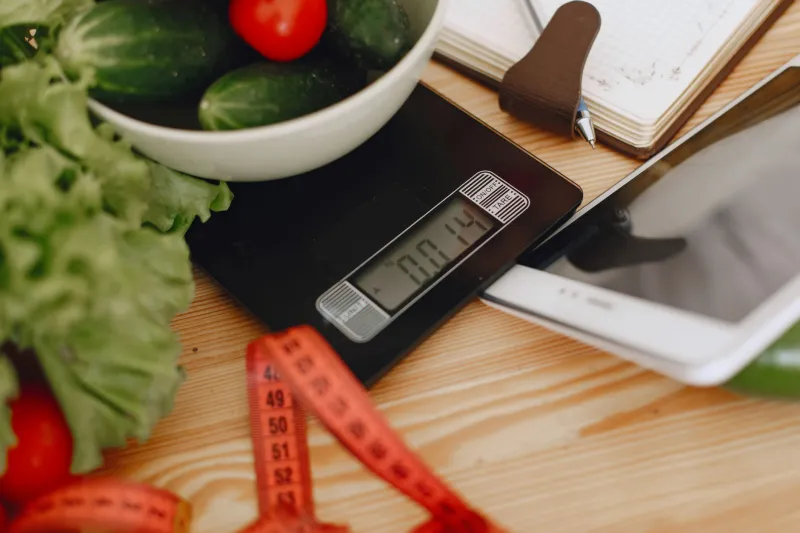
You're Counting Something That Was Never Exactly Counted
If you've ever carefully tracked calories — logging every meal, doing the mental math before ordering, feeling guilty about going 47 calories over your daily goal — this might sting a little.
The number printed on that nutrition label? It's a legal estimate. And the law says it can be off by up to 20% in either direction.
That means a snack bar labeled at 250 calories could legally contain anywhere from 200 to 300 calories and still pass FDA standards. A restaurant entrée listed at 800 calories might actually deliver closer to 1,000. And research suggests that for restaurant meals in particular, the gap between listed and actual calorie counts is often far wider than most people realize.
None of this is a secret, exactly. But it's also not something food companies are eager to advertise.
How Calories Are Actually Calculated — Using a 19th-Century Furnace
Here's the part that tends to surprise people: the method most commonly used to calculate calorie content was developed in the 1800s. It's called the Atwater system, named after Wilbur Atwater, an American chemist who spent years in the 1890s literally burning food inside a sealed chamber called a bomb calorimeter and measuring the heat produced.
 Photo: Wilbur Atwater, via images.fineartamerica.com
The idea was straightforward: food releases energy when burned, and that energy can be measured. Proteins and carbohydrates release roughly 4 calories per gram. Fat releases about 9. Fiber gets a small adjustment. Add it all up and you get the number on the label.
The problem is that your body is not a furnace. It doesn't combust food in a controlled chamber. It digests, ferments, absorbs, and excretes — and the efficiency of that process varies enormously depending on the food itself, how it was prepared, and who's eating it.
A raw almond and a roasted almond have the same listed calorie count. But research from the USDA found that the body absorbs significantly fewer calories from raw almonds because the cell walls are harder to break down. Cooking changes things too — cooked pasta and cold pasta have different glycemic effects because of how starch restructures when it cools. None of that nuance makes it onto the label.
Restaurant Meals Are in a Different Category Entirely
The FDA margin of error applies to packaged foods. Restaurant calorie counts operate in an even murkier space.
Since 2018, chain restaurants with 20 or more locations have been required to post calorie counts on menus. The intention was good. The execution has been complicated.
Multiple studies — including research published in the British Medical Journal and investigations by health reporters — have found that restaurant meals routinely contain significantly more calories than what's listed. One analysis found that nearly 20% of restaurant dishes contained at least 100 more calories than stated, with some exceeding their listed counts by several hundred. Portion sizes vary between shifts, between locations, between whoever's plating the food that day. A generous hand with olive oil or butter can add hundreds of calories without changing what's on the menu board.
This isn't about restaurants being deceptive. It's about the nature of food preparation at scale. Consistency is hard. Calorie precision is harder.
The Bigger Issue: 'Calories In, Calories Out' Is a Simplification That Doesn't Hold Up
Even if every calorie label were perfectly accurate, there's a deeper problem with the way most Americans have been taught to think about calories.
The 'calories in, calories out' model — the idea that weight is simply a function of how much you eat versus how much you burn — treats the human body like a bank account. Deposit food, withdraw energy through movement, keep the balance where you want it. Clean and logical.
Except the body doesn't work that way.
Your gut microbiome affects how many calories you extract from food. Two people can eat the exact same meal and absorb meaningfully different amounts of energy, depending on the composition of their gut bacteria. Hormones like insulin, cortisol, and leptin influence where your body stores fat and how readily it burns it. Metabolic adaptation — the way your metabolism slows in response to reduced calorie intake — is a well-documented phenomenon that makes long-term calorie restriction increasingly inefficient over time.
None of this is captured in the number on the label.
So Why Do We Treat Calorie Counts Like Gospel?
Partly because precise numbers feel reassuring. There's something psychologically comforting about believing that if you track everything carefully enough, you'll get the outcome you want. Nutrition labels feed into that sense of control.
Partly because the alternative — acknowledging that food's effect on your body is complex, individual, and difficult to fully quantify — is harder to act on. 'Eat 1,800 calories a day' is a rule. 'Eat in a way that accounts for your metabolism, gut microbiome, sleep quality, stress levels, and hormonal profile' is a lifestyle overhaul.
And partly because the diet industry, which generates billions of dollars annually, has a strong financial interest in keeping calorie counting central to how Americans think about food.
What This Actually Means for You
None of this means calorie awareness is useless. Understanding roughly how energy-dense different foods are — knowing that a handful of almonds has more calories than a cup of berries — is genuinely helpful information.
But treating calorie counts as precise measurements, agonizing over 30-calorie differences, or feeling like a failure when careful tracking doesn't produce expected results? That's working with a tool that was never as accurate as advertised.
The actual science points toward paying attention to food quality, satiety, and how your body responds — rather than chasing a number that was calculated in a 19th-century furnace and is legally allowed to be 20% wrong before it even reaches your hands.