Carbs Became the Villain of American Eating — But the Science That Was Supposed to Prove It Never Quite Did
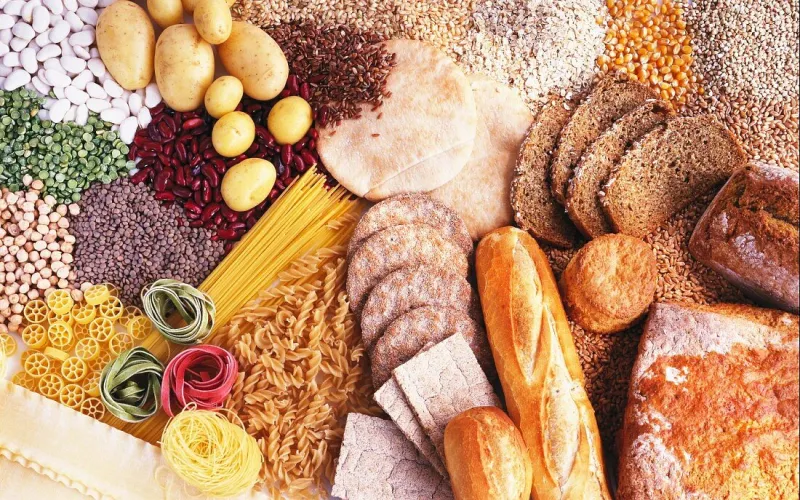
Photo: variety of carbohydrate foods bread pasta rice whole grains on table, via media01.stockfood.com
Ask most Americans what they'd cut first if they were trying to lose weight, and carbohydrates would top the list. Bread, pasta, rice, potatoes — these foods occupy a specific place in diet culture as things you're supposed to feel guilty about, moderate aggressively, or eliminate entirely. The low-carb movement has been so dominant for so long that it barely registers as a diet trend anymore. It feels like established nutritional fact.
Except the science behind it has always been a lot more complicated than the headlines suggested — and some of the foundational research that launched the carb-phobia era was built on shakier ground than most people realize.
How One Researcher Shaped Decades of Eating Habits
To understand how carbohydrates ended up as dietary enemy number one, you have to go back to the mid-twentieth century and a physiologist named Ancel Keys. Keys was studying the relationship between diet and heart disease, and his most influential work — the Seven Countries Study, published in the 1970s — argued that dietary fat, particularly saturated fat, was the primary driver of cardiovascular disease.
That might seem like an argument against fat, not carbs. But the downstream effect was enormous. As the food industry and public health officials began steering Americans away from fat, something had to fill the caloric gap. That something was carbohydrates. Manufacturers reformulated products to be low-fat, loading them with sugar and refined carbs instead. People ate more bread, more cereal, more processed snack foods — all labeled as healthier alternatives.
Then, predictably, obesity rates climbed anyway. And when researchers and diet-book authors started looking for an explanation in the 1990s and early 2000s, they landed on the carbohydrates that had replaced the fat. The pendulum swung hard. Fat got quietly rehabilitated. Carbs became the new villain.
What's important to understand is that neither swing was fully supported by clean, conclusive research. Keys's original study has been criticized for cherry-picking data from countries that fit his hypothesis while ignoring countries that didn't. And the anti-carb movement that followed built its case largely on insulin response studies and short-term weight loss data that didn't always hold up over longer timeframes.
The Insulin Theory Sounds Logical — But It Gets Complicated
The metabolic argument against carbohydrates centers on insulin. When you eat carbs, blood glucose rises, insulin is released, and insulin promotes fat storage. The conclusion that many low-carb advocates drew: fewer carbs means less insulin means less fat storage means weight loss. Simple, mechanistic, easy to explain.
The problem is that human metabolism doesn't operate as a simple equation. Insulin response varies dramatically based on what kind of carbohydrates you eat, what else you eat alongside them, your individual metabolic health, your activity level, and your gut microbiome composition. A bowl of lentils and a bowl of white rice both contain carbohydrates, but their metabolic effects are meaningfully different.
More importantly, long-term controlled studies comparing low-carb and low-fat diets have repeatedly found that the differences in weight loss largely disappear after the first year. Both approaches work when people actually follow them. Neither has proven categorically superior for the general population. A landmark 2018 study published in JAMA — one of the most rigorous diet comparison trials conducted — found that after 12 months, low-carb and low-fat dieters had lost nearly identical amounts of weight.
That's not the result you'd expect if carbohydrates were inherently fattening in the way diet culture has insisted.
Not All Carbs Are the Same — And That Distinction Matters Enormously
One of the most persistent problems with the anti-carb narrative is that it treats all carbohydrates as interchangeable. Refined white flour and whole oats both contain carbs. A Snickers bar and a sweet potato both contain carbs. Lumping them together into a single macronutrient category and declaring it dangerous is like saying all liquids are unhealthy because alcohol is a liquid.
Nutritional research has consistently shown that the type and quality of carbohydrates matters far more than the total amount. Whole grains, legumes, fruits, and vegetables — all carbohydrate sources — are associated with reduced risk of cardiovascular disease, type 2 diabetes, and certain cancers in large population studies. Highly refined, heavily processed carbohydrates with added sugars show the opposite pattern.
The problem was never carbohydrates. The problem was what happened to carbohydrates after industrial food processing got involved.
Why the Myth Has Such Staying Power
Low-carb diets do work for a lot of people in the short term, and that success is real — it's just not necessarily happening for the reasons the theory suggests. Cutting carbs usually means cutting out a huge category of processed, calorie-dense foods. It often increases protein intake, which is highly satiating. It tends to reduce overall caloric consumption even without counting calories. Those are legitimate mechanisms for weight loss. They just don't require carbohydrates to be metabolically toxic.
The diet book industry also has a significant financial stake in maintaining the carb-villain narrative. Simple, dramatic dietary rules sell books. "Eat mostly whole foods, including plenty of carbohydrates, and pay attention to how much you're eating overall" is accurate but makes for a terrible bestseller title.
What Current Research Actually Suggests
Metabolic scientists today are largely moving away from macronutrient-level arguments and toward a more individualized understanding of diet. Factors like food quality, eating patterns, sleep, stress, and gut health interact in ways that make sweeping rules about entire macronutrients less useful than they once seemed.
The carbohydrates in a traditional Mediterranean diet — bread, legumes, fruit, whole grains — are associated with some of the best health outcomes in the world. That's hard to square with the idea that carbs are inherently problematic.
The actual takeaway isn't that carbs are fine and you should eat unlimited pasta. It's that the story was never as simple as the headlines made it sound — and that a single macronutrient was never really the villain it was made out to be.