When Your Child Has a Fever, Your First Instinct Might Be Sabotaging Their Recovery
When Your Child Has a Fever, Your First Instinct Might Be Sabotaging Their Recovery
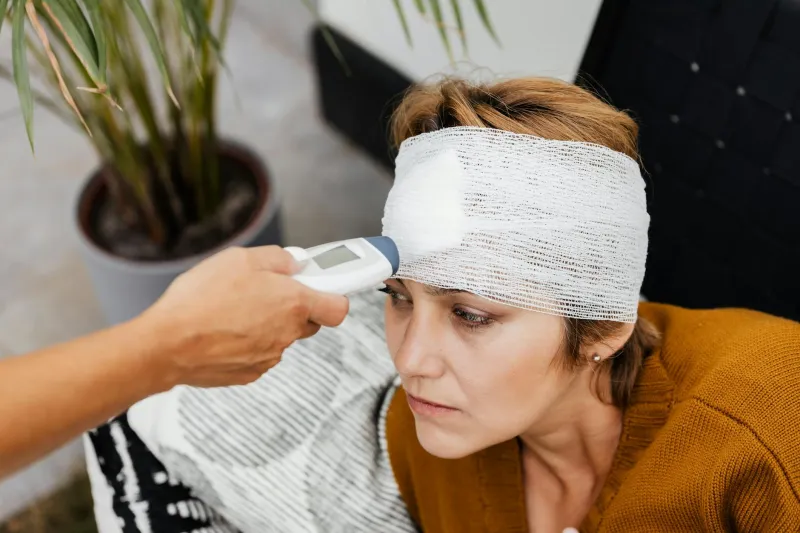
The scene plays out in homes across America every winter: a parent touches their child's forehead, feels heat, grabs the thermometer, sees 100.2°F, and immediately reaches for the Tylenol. It's an almost reflexive response that feels like good parenting — after all, fever means sickness, and reducing fever means helping your child feel better, right?
Not exactly. And the gap between what most parents believe about fever and what science actually tells us reveals one of the most persistent medical misconceptions of our time.
The Fever Panic That Grips American Parents
Most parents treat fever like an emergency. A 2019 study published in Clinical Pediatrics found that 85% of parents give fever-reducing medication when their child's temperature hits 100.4°F — the technical threshold for fever. Many start medicating at even lower temperatures.
This "fever phobia," as pediatricians call it, runs so deep that parents often wake sleeping children to give them medicine, alternate between different medications throughout the day, and rush to emergency rooms for fevers that aren't accompanied by serious symptoms.
But here's what's actually happening when your child develops a fever: their immune system is working exactly as designed.
Why Your Child's Body Cranks Up the Heat
Fever isn't a malfunction — it's a feature. When harmful bacteria or viruses invade the body, the immune system responds by releasing chemical signals that tell the brain's temperature control center to raise the body's thermostat.
This temperature increase serves multiple purposes that researchers have documented over decades of study:
Enhanced immune cell activity: White blood cells move faster and work more efficiently at higher temperatures. Studies show that immune cells called neutrophils are 20% more effective at killing bacteria when body temperature rises just 2-3 degrees.
Hostile environment for pathogens: Many bacteria and viruses that infect humans are adapted to thrive at normal body temperature. Raising the temperature even slightly can slow their reproduction and weaken their ability to spread.
Faster healing processes: The chemical reactions involved in tissue repair and immune responses speed up at higher temperatures, following basic principles of chemistry and biology.
The Research That Should Change How We Think About Fever
A landmark study published in the Journal of Infectious Diseases followed children with chickenpox, comparing those who received fever-reducing medication with those who didn't. The results were striking: children whose fevers were allowed to run their course recovered faster and had fewer complications.
Similar findings have emerged from studies of other viral infections. Research on influenza shows that people who take fever reducers early in their illness often experience longer symptom duration and may even shed virus for extended periods, potentially making them contagious longer.
"We've spent so much time thinking of fever as the enemy that we forgot it's actually part of the cure," explains Dr. Sarah Chen, a pediatric infectious disease specialist at Children's Hospital of Philadelphia.
Where the Fear of Fever Came From
The modern panic around fever has roots in legitimate medical history, but the context has been lost over generations.
In the pre-antibiotic era, high fevers were often associated with serious, life-threatening infections like pneumonia, meningitis, or sepsis. Before modern medicine, a fever could indeed signal imminent death. Parents and doctors learned to fear any temperature elevation.
The pharmaceutical industry reinforced these fears starting in the 1950s and 1960s as over-the-counter fever reducers became widely available. Marketing campaigns emphasized the importance of "breaking" fevers quickly, and the message stuck.
Additionally, the one genuinely dangerous fever-related condition — febrile seizures — became conflated with fever itself in many parents' minds. While febrile seizures affect about 3% of children and look terrifying, they're typically harmless and aren't prevented by giving fever-reducing medication.
What Pediatricians Actually Recommend
Current guidelines from the American Academy of Pediatrics take a much more nuanced approach to fever than most parents realize. The official recommendation? Treat the child, not the thermometer.
This means:
- If your child has a fever but is playing, eating, and drinking normally, medication isn't necessary
- Fever reducers should be used primarily for comfort, not to lower temperature
- The goal isn't to return temperature to normal, but to help the child feel better
- Many fevers resolve faster when left alone
The AAP specifically states that fever itself is rarely dangerous and that the practice of alternating different medications or waking children to give medicine is unnecessary and potentially harmful.
When Fever Actually Is a Problem
This doesn't mean all fevers should be ignored. Certain situations do require immediate medical attention:
- Fever in infants under 3 months old
- Temperatures above 104°F
- Fever accompanied by difficulty breathing, severe headache, stiff neck, or other serious symptoms
- Any fever in a child who appears very ill, regardless of the temperature reading
But for the typical childhood fever — the 101°F temperature that comes with a common cold or stomach bug — aggressive treatment may actually be counterproductive.
Breaking the Fever-Fighting Habit
Changing how we respond to fever requires fighting against decades of ingrained behavior and cultural messaging. It means accepting that sometimes the best thing to do is nothing at all.
For parents, this shift can feel uncomfortable. We're conditioned to take action when our children are sick. But understanding fever as an ally rather than an enemy can lead to better outcomes and less stress for the whole family.
The next time your child develops a fever, take a step back before reaching for the medicine cabinet. Ask yourself: How is my child acting? Are they eating, drinking, and playing relatively normally? If so, their body might be doing exactly what it's supposed to do — and your best parenting move might be to let it work.