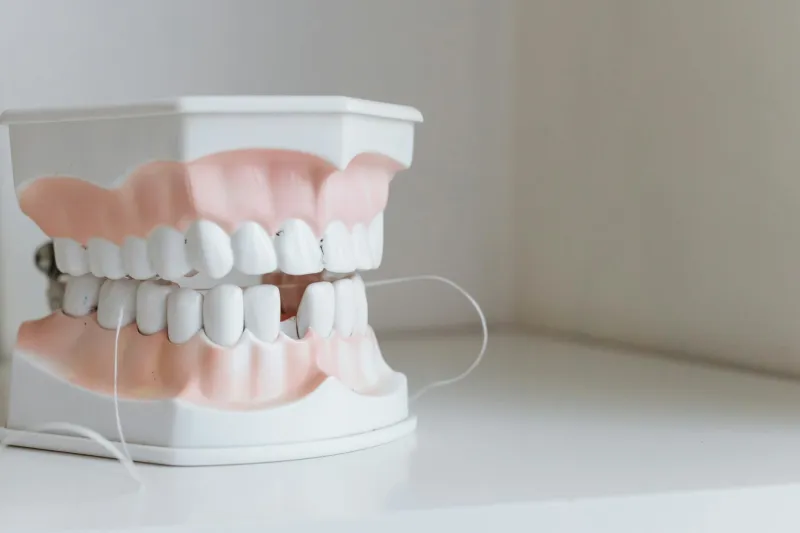
Walk into any dental office in America, and you're guaranteed to hear the same lecture you've been getting since childhood: brush twice a day, and floss daily. The hygienist will demonstrate proper technique with a plastic model, hand you a sample pack of dental floss, and remind you that you should "only floss the teeth you want to keep."
That last line has become such a staple of dental visits that most people assume it's backed by decades of rock-solid research. It's not.
When Journalists Did What Scientists Should Have Done
In 2016, the Associated Press decided to take a closer look at the scientific foundation for daily flossing recommendations. What they found was startling: the evidence base was not just weak — it was almost nonexistent.
The AP's investigation revealed that most studies supporting flossing lasted only a few weeks, involved small groups of participants, and used research methods that wouldn't meet today's standards for clinical evidence. When the reporters pressed the American Dental Association and the Department of Health and Human Services for stronger evidence, both organizations quietly removed flossing from their dietary guidelines.
This wasn't some fringe investigation by conspiracy theorists. This was mainstream journalism applying basic scrutiny to a health recommendation that millions of Americans had been following for generations.
The Research That Actually Exists
Here's what the scientific literature actually says about flossing: the evidence is mixed at best.
Several systematic reviews — the gold standard for evaluating medical evidence — have found only modest benefits for flossing when it comes to reducing gum inflammation. For cavity prevention, the evidence is even weaker. A 2011 Cochrane review, considered the most rigorous type of medical analysis, found that adding flossing to tooth brushing provided only a small reduction in plaque after one to three months.
The studies that do show benefits often have significant limitations. Many were funded by companies that manufacture dental floss. Others used professional flossing performed by dental hygienists rather than the self-flossing that patients actually do at home. Still others measured improvements over such short periods that it's impossible to know if the benefits would persist long-term.
Dr. Philippe Hujoel, a professor of oral health sciences at the University of Washington, has spent years reviewing flossing research. His conclusion: "The majority of available studies fail to demonstrate that flossing is generally effective in plaque removal."
 Photo: University of Washington, via photos.wikimapia.org
Why Dentists Haven't Changed Their Tune
If the evidence for flossing is so questionable, why do dental professionals continue recommending it with such confidence?
Part of the answer lies in how medical recommendations become entrenched. The American Dental Association has been promoting flossing since the early 1900s, long before the modern standards for clinical evidence existed. Once a practice becomes standard care, it requires overwhelming evidence of harm — not just lack of benefit — to change professional guidelines.
There's also the issue of liability and conservative medical practice. Dr. Damien Walmsley, a professor of dentistry at the University of Birmingham, explains the dental profession's perspective: "Even if the evidence isn't perfect, flossing is unlikely to cause harm, and there's enough biological plausibility to justify the recommendation."
 Photo: University of Birmingham, via assets.stickpng.com
The biological argument makes intuitive sense: removing food particles and bacteria from between teeth should logically improve oral health. But intuitive sense and scientific proof are two different things.
What Actually Prevents Gum Disease and Cavities
While the flossing debate continues, other oral hygiene practices have much stronger scientific support.
Fluoride toothpaste has been rigorously tested in hundreds of studies and consistently shows significant benefits for preventing tooth decay. Regular brushing with fluoride toothpaste remains the single most evidence-based recommendation in oral hygiene.
Antibacterial mouthwashes also have solid research backing, particularly for reducing gum inflammation and controlling the bacteria that cause periodontal disease. Some studies suggest that certain mouthwashes may be more effective than flossing for reducing gingivitis.
Regular professional cleanings and checkups have strong evidence for preventing both cavities and gum disease, though the optimal frequency depends on individual risk factors rather than the standard twice-yearly schedule.
The Real Drivers of Oral Health
Perhaps most importantly, research consistently shows that diet and lifestyle factors have enormous impacts on oral health — impacts that may dwarf the benefits of any particular hygiene technique.
Sugar consumption, particularly from sugary drinks, remains the strongest dietary predictor of tooth decay. Smoking dramatically increases the risk of gum disease and tooth loss. Genetics play a significant role in determining who develops periodontal problems regardless of their hygiene habits.
Some people can skip flossing for years without developing significant problems, while others develop gum disease despite meticulous oral hygiene. This suggests that individual risk factors may be more important than universal recommendations.
A More Honest Conversation
None of this means flossing is useless or that you should abandon it entirely. If you enjoy flossing and feel it helps your oral health, there's no reason to stop. The potential benefits, even if modest, likely outweigh the minimal risks.
But it does mean that the confident, universal recommendation for daily flossing isn't as scientifically grounded as most people assume. A more honest conversation might acknowledge that the evidence is limited while still discussing the potential benefits.
Dr. Marcelo Araujo, a periodontist at the University of Florida, suggests a more nuanced approach: "We should be talking to patients about their individual risk factors and helping them develop oral hygiene routines that work for their specific situations, rather than applying one-size-fits-all recommendations."
 Photo: University of Florida, via www.cardcow.com
The Bottom Line Your Hygienist Won't Tell You
The next time you're sitting in that dental chair getting the standard flossing lecture, remember that the science behind the recommendation is more complicated than the confident delivery suggests. The dental profession built its flossing guidelines on limited evidence and hasn't significantly updated them despite decades of mixed research results.
This doesn't mean your dentist is trying to deceive you. It means that medical recommendations, once established, can take on a life of their own that outlasts the evidence that created them. Sometimes the most honest answer is that we don't know as much as we pretend to know — even about something as basic as cleaning between your teeth.