Every hospital patient knows the feeling: you're cold, vulnerable, and the blanket they give you feels like it was woven from paper towels. Your first thought is probably that the hospital is cutting costs on patient comfort.
You'd be wrong.
Those deliberately thin, scratchy blankets are actually more expensive than the cozy ones you have at home — and they're designed that way for reasons that have nothing to do with your comfort.
The Hidden Science of Hospital Textiles
Hospital blankets are engineered products, not comfort items. They're designed to withstand industrial washing at temperatures that would destroy regular bedding, resist harboring bacteria and viruses, and maintain their properties through hundreds of wash cycles.
The thin weave isn't an accident — it's intentional. Thicker blankets with plush fibers create more surface area for pathogens to hide in. They also trap moisture, creating ideal breeding conditions for bacteria. Those scratchy fibers that feel so unpleasant? They're specifically chosen because they don't provide the nooks and crannies that microorganisms love.
Dr. Patricia Lynch, an infection control specialist who helped develop modern hospital textile standards, explains it this way: "We're not making blankets for comfort. We're making them as medical devices that happen to keep people warm."
The 180-Degree Wash Cycle
Here's what happens to your hospital blanket after you use it: it gets washed in water heated to at least 160 degrees Fahrenheit, often higher. Regular blankets would fall apart under these conditions. Hospital textiles are built to survive this process hundreds of times while maintaining their infection-control properties.
The detergents used aren't gentle fabric softeners — they're industrial-strength chemicals designed to eliminate every trace of biological material. The entire washing process is monitored and documented to meet healthcare regulations that don't exist for regular laundries.
This is why hospital blankets feel different when they're new versus after dozens of wash cycles. They're literally being sterilized to medical standards every single time.
The Policy That Changed Everything
The modern hospital blanket traces back to infection control policies developed in the 1980s, when healthcare-associated infections were becoming a major concern. Hospitals realized that soft furnishings — blankets, pillows, curtains — were acting as reservoirs for dangerous bacteria.
The solution wasn't to make things more comfortable. It was to redesign everything that touched patients to be as hostile to microorganisms as possible.
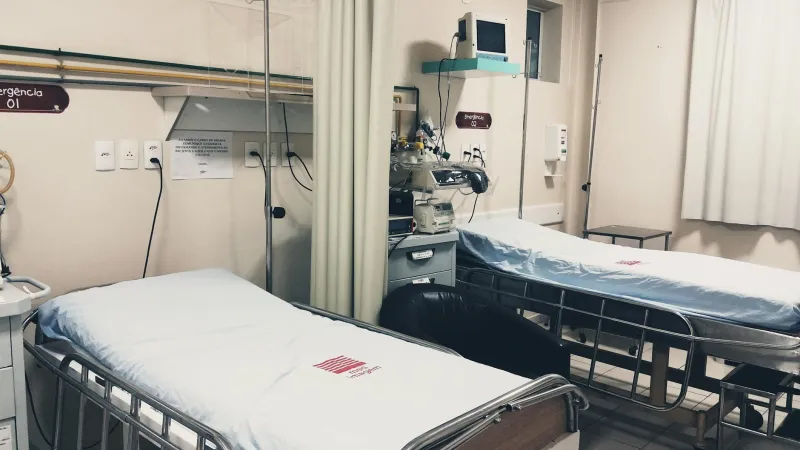
This philosophy extends beyond blankets. Hospital furniture has hard surfaces that can be disinfected. Wall paint contains antimicrobial agents. Even the ceiling tiles are chosen for their ability to resist mold and bacteria.
The Comfort vs. Safety Trade-off
Patient satisfaction surveys consistently rank hospital blankets among the top comfort complaints. Hospitals know this. They've done focus groups, tested alternatives, and explored compromises.
But here's the problem: every step toward comfort is a step away from infection control. Softer fibers hold onto bacteria longer. Thicker weaves take longer to dry completely. More absorbent materials can harbor pathogens between wash cycles.
Some hospitals have experimented with two-tier systems: medical-grade blankets for high-risk patients and more comfortable options for others. But the logistics of managing different blanket types, ensuring they don't get mixed up, and maintaining separate washing protocols proved too complex for most facilities.
What This Reveals About Healthcare Priorities
The hospital blanket dilemma illustrates a fundamental tension in American healthcare: medical necessity versus patient experience. Hospitals are simultaneously trying to prevent infections that kill thousands of patients annually and provide a comfortable, hotel-like experience that satisfies survey scores.
These goals often conflict. The safest medical environment isn't necessarily the most comfortable one.
Patient advocacy groups have pushed for more comfort-oriented policies, arguing that patient satisfaction affects recovery outcomes. But infection control specialists counter that preventing healthcare-associated infections — which affect 1 in 31 hospital patients — takes priority over comfort concerns.
The Innovation That's Still Missing
Textile manufacturers have been working for decades to develop hospital blankets that are both comfortable and medically safe. Some newer options use antimicrobial fibers or special weaves that feel softer while maintaining infection control properties.
But adoption has been slow. Hospitals are conservative institutions that don't switch suppliers lightly. The current blankets have decades of safety data behind them. Newer alternatives, even if they test well in laboratories, don't have the same track record in real-world hospital environments.
The Bigger Picture
That uncomfortable hospital blanket represents something larger: the invisible ways that patient safety requirements shape your healthcare experience. The hard chairs, the bright lights, the constant noise — much of what makes hospitals feel institutional isn't about cost-cutting or indifference.
It's about creating an environment where medical priorities take precedence over everything else, including comfort. Whether that's the right balance is a question each hospital system has to answer for itself.
But the next time you're shivering under one of those thin blankets, at least you'll know it's not because nobody cared about your comfort. It's because somebody cared more about your safety.