Intuitive Eating Sounds Like Common Sense — Until You See What the Food Industry Did to Your Hunger Signals
The Advice That Sounds Obvious
At some point, a doctor, a nutritionist, a wellness blogger, or a well-meaning friend probably told you some version of this: listen to your body. Eat when you're genuinely hungry. Stop when you feel satisfied. Trust your instincts.
It's framed as a return to something natural, a rejection of rigid dieting in favor of the intuitive relationship with food that humans supposedly had before calorie counting and meal plans. The concept even has an official name — intuitive eating — and it's been embraced by registered dietitians, therapists, and health-at-every-size advocates as a healthier alternative to restriction-based diets.
The problem isn't with the philosophy. The problem is with the environment it's being asked to operate in.
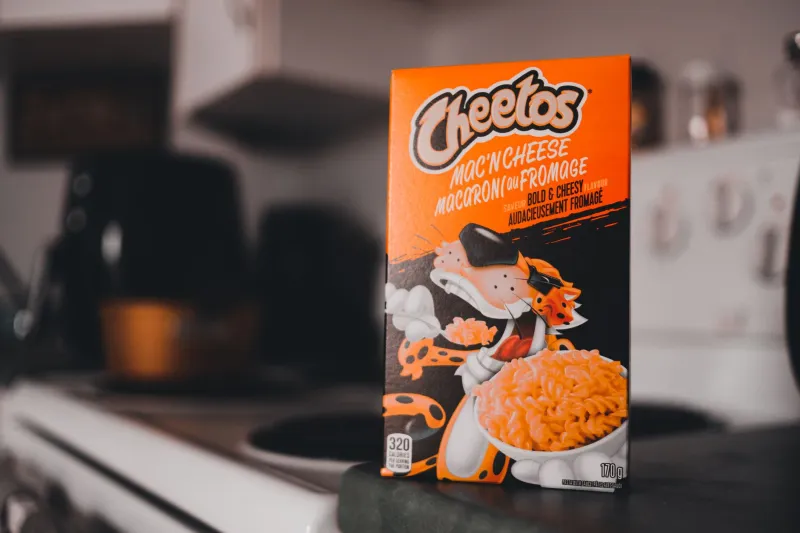
Because while nutrition experts were developing frameworks for honoring hunger cues, the food industry was spending decades — and billions of dollars — engineering products specifically designed to make those cues unreliable.
How Food Gets Engineered to Keep You Eating
In the 1990s and early 2000s, food companies began investing heavily in what the industry calls "sensory-specific satiety" research. The concept is straightforward: your brain gets bored of a single flavor fairly quickly, which is your body's way of encouraging dietary variety. Processed food developers learned to exploit this by creating products with layered, shifting flavor profiles that never quite resolve into a single dominant taste.
The result is what food scientist Howard Moskowitz famously called the "bliss point" — the precise combination of sugar, salt, and fat that maximizes craving without triggering the brain's natural "enough" response. Foods engineered this way don't just taste good. They're specifically calibrated to make "enough" feel perpetually just one more bite away.
This isn't speculation or conspiracy. It's documented in internal food industry research, academic studies, and firsthand accounts from former food scientists. Michael Moss's reporting in Salt Sugar Fat drew on thousands of pages of internal industry documents showing exactly how systematically this optimization was pursued.
What Happens in Your Brain
Your body's fullness system relies on a cascade of signals. Your stomach stretches and sends mechanical signals. Hormones like leptin and cholecystokinin tell your brain that energy has arrived. Blood glucose levels shift. These signals take time — typically 15 to 20 minutes after you start eating — to fully register.
Ultraprocessed foods are designed to work faster than that feedback loop. They're often calorie-dense but low in fiber and protein, the two things that most reliably trigger satiety signals. They dissolve quickly in the mouth, which means your brain doesn't register the same "work" as chewing through whole foods. And their engineered flavor complexity keeps your reward circuits firing even when your stomach is physically full.
A landmark 2019 study from the National Institutes of Health gave participants either an ultraprocessed diet or an unprocessed diet for two weeks, with both groups allowed to eat as much as they wanted. The ultraprocessed group consumed an average of 500 more calories per day — not because they were hungrier, but because the food they were eating was specifically built to encourage continued eating past the point of genuine need.
That's not a willpower gap. That's food engineering doing exactly what it was designed to do.
Where Standard Nutrition Advice Falls Short
Here's the disconnect that rarely gets addressed directly: most nutrition guidance — including intuitive eating frameworks — was developed with an implicit assumption that the food environment is more or less neutral. That your hunger signals are sending you accurate information about your body's needs, and your job is simply to pay attention to them.
But if you're eating a diet heavy in ultraprocessed foods, those signals have been partially hijacked. Your hunger isn't just a reflection of caloric need. It's also a reflection of dopamine responses, flavor engineering, and the deliberate suppression of satiety cues.
Telling someone in that situation to "just listen to their body" is a little like telling someone to navigate by the stars while someone else is quietly moving them. The advice isn't wrong in principle. But it's missing crucial context about the terrain.
This doesn't mean intuitive eating is useless — for people eating mostly whole foods, it may genuinely help break cycles of restrictive dieting. But applying it without acknowledging the food environment most Americans actually live in leaves out the most important part of the story.
The Bigger Picture
The cultural narrative around overeating has long centered on individual failure. People eat past fullness because they lack self-control, they eat emotionally, they don't listen to their bodies closely enough. The solution, in this framing, is always more personal discipline or better self-awareness.
What the research increasingly suggests is that this framing lets a multi-billion-dollar industry entirely off the hook. The same companies that fund nutrition education programs, sponsor professional dietary organizations, and place their products in school cafeterias have simultaneously spent decades refining the science of making their products as difficult to stop eating as possible.
That's not a personal failure. It's an engineered outcome.
The Takeaway
Listening to your hunger cues is still good advice — in the right context. But understanding that the modern food environment has been deliberately designed to distort those cues is not a minor footnote. It's arguably the central fact of American eating culture that most nutritional guidance quietly skips over.
If you've ever felt like you know you should stop eating but can't quite get there, you're not broken. You're responding to a food system that spent an enormous amount of money making sure that moment of "enough" stays just out of reach.