The Date That Might Not Mean What You Think
Most Americans treat sunscreen expiration dates like they treat milk dates — a clear line between safe and unsafe. The bottle says it expires in 2025, so it should work fine until December 31, 2024, right?
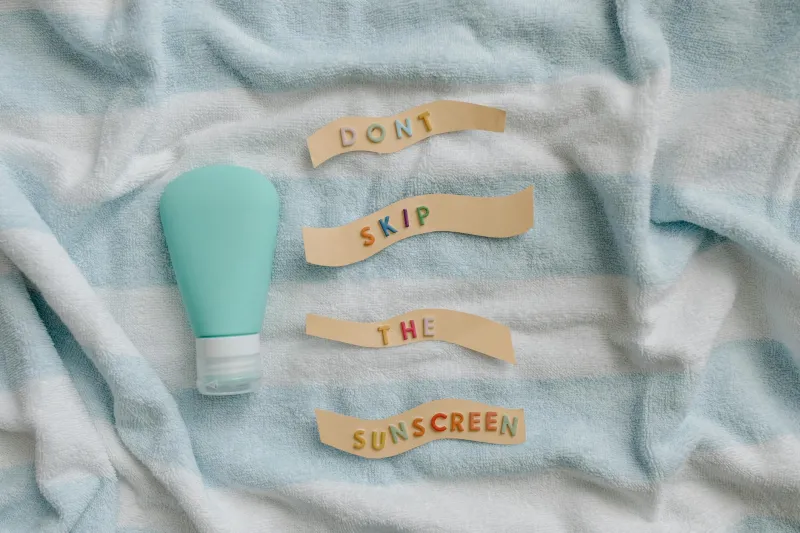
Not exactly. Sunscreen expiration dates represent the manufacturer's guarantee that the product will maintain its labeled SPF under ideal storage conditions. But "ideal storage conditions" aren't where most people keep their sunscreen, and the way these chemical and mineral compounds break down over time is more complex than a simple calendar date.
Understanding what actually happens to sunscreen as it ages — and what accelerates that process — can mean the difference between real protection and a false sense of security.
The Chemistry Behind the Shield
Sunscreen works through two basic mechanisms: chemical filters that absorb UV radiation and convert it to heat, or mineral filters (zinc oxide and titanium dioxide) that physically block and scatter UV rays.
Chemical sunscreens contain compounds like avobenzone, octinoxate, and oxybenzone. These molecules are designed to absorb specific wavelengths of UV light, but they're also inherently unstable. Each time they absorb UV radiation, they undergo a molecular change. Eventually, repeated exposure degrades them to the point where they can no longer provide effective protection.
Mineral sunscreens are more stable because zinc oxide and titanium dioxide don't break down from UV exposure. However, the formulations that keep these minerals suspended and spreadable can still degrade over time, affecting how evenly the product applies and how well it adheres to skin.
Heat: The Silent SPF Killer
Here's where most people go wrong: they leave sunscreen in hot cars, beach bags, or poolside for hours in direct sunlight. Heat dramatically accelerates the breakdown of both chemical and physical sunscreen ingredients.
A study published in the Journal of the American Academy of Dermatology found that sunscreen stored at 104°F (40°C) for 12 weeks showed significant decreases in SPF protection compared to the same products stored at room temperature. The interior of a car on a summer day can easily reach 140°F (60°C) or higher.
Chemical filters are particularly vulnerable to heat degradation. Avobenzone, one of the most common UVA filters, begins breaking down at temperatures well below what your car reaches on a hot day. Once degraded, these compounds can actually become less effective and potentially more irritating to skin.
Light Exposure: The Ironic Problem
Sunscreen is designed to protect you from light, but exposure to light also breaks it down over time. UV radiation gradually degrades the same compounds that are supposed to protect you from UV radiation.
This creates a catch-22 for sunscreen storage. You want it accessible for regular use, but storing it where you can easily grab it — like in a clear container by the pool or in your beach bag — often means exposing it to the very thing it's meant to protect against.
Even fluorescent lighting can contribute to sunscreen degradation over extended periods, which is why dermatologists recommend storing sunscreen in cool, dark places when possible.
The Formulation Factor
Not all sunscreens age the same way. Products with antioxidants like vitamin E or vitamin C tend to maintain their effectiveness longer because these compounds help prevent the oxidative breakdown of other ingredients.
Spray sunscreens face additional challenges because the propellants and solvents used to make them sprayable can separate or break down over time, leading to uneven application even if the active ingredients are still effective.
Waterproof and water-resistant formulations often contain additional polymers and film-forming agents that can degrade differently than the UV filters themselves, potentially affecting how well the product adheres to skin during swimming or sweating.
The Real-World Test
So how can you tell if your sunscreen is still protecting you? There are a few practical signs that your sunscreen has degraded:
Consistency changes: If the product has separated, become unusually thick or thin, or developed lumps, the formulation has likely broken down.
Color changes: Yellowing or other color shifts often indicate chemical degradation.
Smell changes: A rancid, sharp, or otherwise off odor suggests the product has gone bad.
Skin irritation: If a sunscreen that never bothered you before suddenly causes stinging or redness, degraded ingredients might be the culprit.
But here's the tricky part: sunscreen can lose effectiveness without showing any visible signs of degradation. You might not know your SPF 30 is performing like an SPF 15 until you get burned.
Storage Strategies That Actually Work
The most effective way to extend sunscreen life is controlling temperature and light exposure. Store unopened bottles in a cool, dry place like a bathroom cabinet or bedroom dresser.
For daily-use bottles, consider keeping a small amount in a travel-size container and refilling it from a larger bottle stored properly at home. This minimizes heat and light exposure to your main supply.
If you're spending a day at the beach or pool, keep sunscreen in an insulated bag or cooler when possible. Even keeping it wrapped in a towel can provide some protection from direct heat.
Avoid leaving sunscreen in cars, especially during summer months. The temperature swings from hot days to cool nights can cause repeated expansion and contraction that affects product stability.
The Bottom Line on Expiration
Expiration dates on sunscreen are based on stability testing under controlled conditions — typically around 70°F (21°C) with minimal light exposure. Real-world storage conditions are often much harsher.
As a practical rule, sunscreen stored in hot, bright conditions might lose effectiveness months before its printed expiration date, while sunscreen stored properly in cool, dark conditions might remain effective somewhat beyond that date.
When in doubt, replace it. Sunscreen is relatively inexpensive compared to the cost of treating sun damage, skin cancer, or even a severe sunburn. The peace of mind that comes with knowing your sun protection is working as advertised is worth more than saving a few dollars on a questionable bottle.
Your skin doesn't know what date is printed on the bottle — it only knows whether the protection you're counting on is actually there when UV rays hit.