Everyone Knows Not to Swim After Eating — But Water Safety Experts Worry About the Dangers We're Ignoring
The Rule That Hijacked Pool Safety
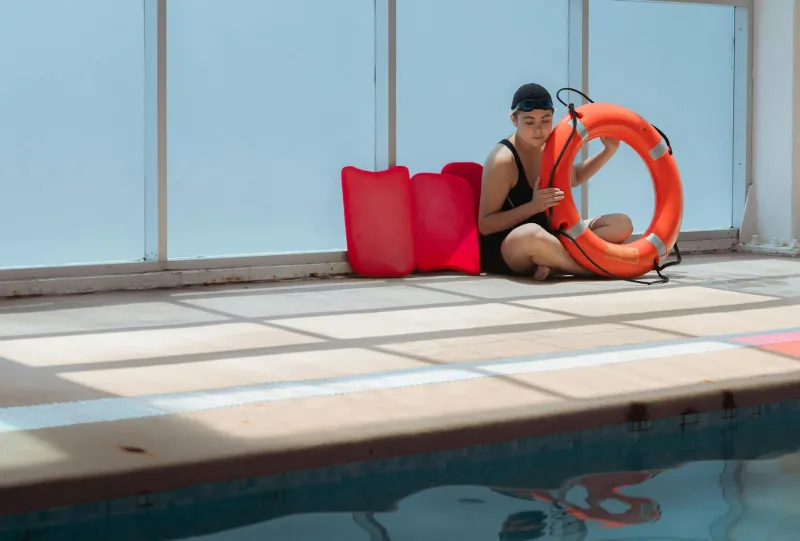
Every summer, the same scene plays out at pools across America: kids finish lunch and immediately want to jump back in the water, only to be told they must wait 30 minutes or risk dangerous cramps. Parents dutifully set timers, believing they're preventing a medical emergency.
Meanwhile, water safety experts watch this ritual with frustration. Not because the cramp theory is wrong — though it is — but because it represents everything backwards about how Americans think about water safety.
"We've turned pool safety into a food timing issue when the real dangers are happening right in front of us," says Dr. Linda Quan, a pediatric emergency physician who studies drowning prevention at Seattle Children's Hospital.
While families obsess over sandwich timing, they're overlooking the factors that actually kill people in water.
The Invisible Killers
Drowning statistics tell a story that has nothing to do with post-meal swimming. According to the CDC, nearly 4,000 Americans die from unintentional drowning each year, with another 8,000 requiring emergency treatment for near-drowning incidents.
The leading causes? They're not what most people expect:
Cold water shock tops the list for adult drownings in open water. When your body hits water below 70°F, it triggers an involuntary gasp reflex that can cause immediate drowning — even in strong swimmers. Yet most Americans have never heard of this phenomenon.
Supervision gaps account for most childhood drowning deaths. Kids can drown in less than 60 seconds, often silently. But parents trained to worry about cramps may feel safe as long as the 30-minute timer hasn't gone off.
Alcohol involvement plays a role in up to 70% of adult recreational water deaths. But there's no cultural equivalent to the eating rule about drinking and swimming.
Overestimating swimming ability kills experienced swimmers regularly. People who can swim laps in a pool may panic in open water with currents, waves, or poor visibility.
The Cramp Myth That Won't Die
The "wait after eating" rule supposedly prevents stomach cramps that could cause drowning. This theory emerged in the early 1900s when people believed that digestion redirected blood flow away from muscles, potentially causing dangerous cramping.
Modern sports medicine has thoroughly debunked this idea. Your body maintains adequate blood flow to all essential systems during digestion, and exercise-related cramps are caused by muscle fatigue and electrolyte imbalances, not food timing.
"I've been treating water-related injuries for 25 years," says Dr. Quan. "I've never seen a single case of someone drowning because they ate lunch and then went swimming."
The American Red Cross quietly dropped the eating rule from their swimming guidelines years ago, but the myth persists in popular culture.
What We're Missing While We Watch the Clock
Sun exposure causes more immediate poolside medical emergencies than any food-related issue. Severe sunburn can require emergency treatment, and heat exhaustion sends thousands of Americans to hospitals each summer. Yet many families are more concerned about their kid's sandwich timing than sunscreen application.
Dehydration ironically affects people surrounded by water. Swimming in hot weather causes significant fluid loss through sweating, but it's harder to notice when you're already wet. This leads to heat-related illnesses that are completely preventable.
Diving injuries cause permanent spinal cord damage every year, especially in backyard pools and natural swimming areas. These catastrophic injuries happen in seconds and often involve people who've used the same swimming spot safely many times before.
Carbon monoxide poisoning from boat engines and pool heaters kills swimmers regularly, particularly in enclosed areas or when people swim near running motors.
None of these dangers have anything to do with lunch timing, but all of them are more likely to cause serious injury or death than the theoretical stomach cramps that dominate safety conversations.
The Psychology of Misplaced Fear
Why do Americans cling to the eating rule while ignoring more serious threats? The answer reveals how we think about risk and control.
"The 30-minute rule gives parents a concrete action they can take," explains Dr. David Schwebel, who studies injury prevention at the University of Alabama. "It's much easier to set a timer than to have difficult conversations about alcohol, or to constantly supervise children in water."
The eating rule also feels scientific and specific — 30 minutes sounds like medical precision. Real water safety advice is often more complex and situational, making it harder to follow.
"People want simple rules," says Dr. Quan. "'Don't swim after eating' is simple. 'Assess water conditions, know your limits, never swim alone, watch for signs of cold water shock, and maintain constant supervision of children' is complicated."
What Actually Keeps People Safe in Water
Water safety experts focus on evidence-based prevention strategies that address real risks:
Learn to recognize drowning: It's usually silent and looks nothing like movie portrayals. Drowning people can't call for help or wave — they're struggling just to breathe.
Understand water conditions: Check temperature, currents, and visibility before entering any natural body of water. Cold water is deadly even for strong swimmers.
Supervise actively: "Water watchers" should do nothing but watch the water. No phones, books, or conversations.
Know your limits: Swimming ability varies dramatically between pools and open water. Even Olympic swimmers can struggle with currents and cold temperatures.
Plan for emergencies: Know where the nearest phone is, learn CPR, and understand that drowning happens fast.
The Cultural Shift We Need
Changing American water safety culture means moving beyond food timing toward evidence-based prevention.
"Every minute we spend talking about sandwiches is a minute we're not talking about the things that actually kill people," says Dr. Quan.
Some progress is happening. Drowning prevention organizations now focus heavily on supervision training, cold water education, and swimming skill development rather than dietary rules.
But the eating myth remains entrenched in summer traditions, passed down from parents who learned it from their parents.
The Real Takeaway
Water safety isn't about timing your meals — it's about understanding and respecting the environment you're entering. Water can be dangerous in ways that have nothing to do with lunch.
The next time you're at a pool or lake, skip the food timer. Instead, focus on the factors that actually matter: supervision, conditions, abilities, and preparation.
Your sandwich won't hurt you. But the things you're not paying attention to might.