America Thought Antibacterial Soap Was Stronger and Safer — Then Scientists Actually Tested It
The Soap That Promised Too Much
In American bathrooms, kitchens, and public restrooms, antibacterial soap became the default choice. The logic seemed bulletproof: if regular soap kills some germs, antibacterial soap must kill more germs, making it obviously superior.
That logic held for about three decades — until scientists actually put it to the test.
In 2016, the FDA dropped a bombshell that most Americans missed: they banned 19 common antibacterial soap ingredients, including triclosan and triclocarban, the two most widely used compounds. The reason? After decades of use, manufacturers still couldn't prove these products worked better than plain soap and water.
Worse, mounting evidence suggested they might be harmful.
How Marketing Created a 'Necessity'
The antibacterial soap story starts in the 1990s, when companies like Procter & Gamble began adding antimicrobial chemicals to ordinary hand soap. The timing was perfect: Americans were becoming increasingly aware of germs, and the promise of "99.9% of bacteria killed" sounded scientifically impressive.
"It was brilliant marketing," says Dr. Stuart Levy, who studies antibiotic resistance at Tufts University. "They took a fear that already existed — germs — and sold a solution that sounded obviously better."
 Photo: Dr. Stuart Levy, via assets.website-files.com
 Photo: Tufts University, via home.nps.gov
Advertisements showed families protected by invisible shields of antibacterial power. The message was clear: regular soap was old-fashioned and insufficient. Antibacterial was modern, advanced, and responsible.
By the 2000s, antibacterial soaps dominated store shelves. Market research showed that 76% of Americans used antibacterial soap regularly, believing it provided superior protection against illness.
What Scientists Discovered When They Actually Looked
The problem was that nobody had rigorously tested whether antibacterial soap actually prevented more illnesses than regular soap in real-world conditions.
When researchers finally conducted those studies, the results were surprising. Multiple large-scale trials found that families using antibacterial soap got sick just as often as families using plain soap.
"In terms of preventing common infections like colds, flu, and stomach bugs, we couldn't find any meaningful difference," explains Dr. Allison Aiello, who led several major studies on antibacterial soap effectiveness at the University of Michigan.
 Photo: University of Michigan, via www.hillel.org
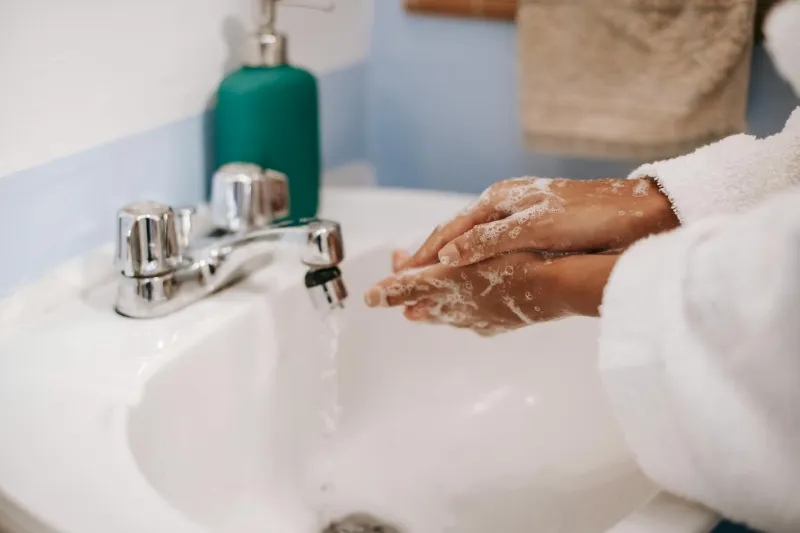
The reason comes down to how soap actually works. Regular soap doesn't kill germs — it removes them. The mechanical action of rubbing your hands together with soap and water physically dislodges bacteria and viruses, washing them down the drain.
Antibacterial chemicals like triclosan do kill some bacteria, but they don't work instantly. You'd need to leave the soap on your hands for about two minutes to get the antimicrobial effect that the lab tests measured.
Since most people wash their hands for 15-20 seconds, antibacterial soap functions essentially like regular soap — removing germs through mechanical action, not chemical killing.
The Unintended Consequences Nobody Saw Coming
While antibacterial soap wasn't providing extra protection, scientists began discovering potential downsides that nobody had anticipated.
Antibiotic resistance concerns: Triclosan works similarly to certain antibiotics. Some researchers worried that widespread use might contribute to antibiotic-resistant bacteria, though this remains debated.
Hormonal disruption: Animal studies suggested triclosan might interfere with hormone function. While human effects remain unclear, the FDA decided the uncertainty wasn't worth the risk for a product that didn't provide proven benefits.
Environmental impact: Triclosan doesn't break down quickly in water treatment plants. It accumulates in waterways, potentially affecting aquatic life.
Skin irritation: Some people developed contact dermatitis from repeated exposure to antimicrobial chemicals.
The FDA's Quiet Revolution
In 2016, the FDA gave soap manufacturers a simple ultimatum: prove your antibacterial ingredients are safe and more effective than plain soap, or stop using them.
No major manufacturer could meet that burden of proof.
"After decades of study, the evidence just wasn't there," says Dr. Theresa Michele, who oversaw the FDA's review. "We couldn't justify continued use of these chemicals in consumer products."
The ban affected household antibacterial soaps but not hand sanitizers (which use alcohol) or hospital-grade antimicrobial products (which serve different purposes and undergo stricter testing).
Why Americans Still Reach for the 'Antibacterial' Label
Despite the FDA action, many Americans continue seeking out antibacterial products. Walk through any drugstore and you'll still see soaps marketed as "antimicrobial" or "antibacterial" — they just use different, unregulated ingredients.
Psychologically, the appeal makes sense. "Antibacterial" sounds more protective than "soap." During cold and flu season, or after touching public surfaces, many people want the reassurance that they're using the strongest available option.
"It's hard to let go of the idea that more chemical intervention equals better protection," observes Dr. Levy. "But sometimes the simple solution really is the best solution."
What Actually Keeps You Healthy
Public health experts emphasize that proper handwashing technique matters far more than soap choice:
Wash for 20 seconds — long enough to sing "Happy Birthday" twice
Use warm water and work up a good lather
Scrub all surfaces including between fingers and under nails
Wash frequently especially before eating and after using the bathroom, touching public surfaces, or being around sick people
Regular soap accomplishes all of this just as effectively as antibacterial formulations — and without the potential downsides.
The Bottom Line
The antibacterial soap phenomenon reveals how easily marketing can override science when it comes to health products. For thirty years, Americans paid premium prices for soap that wasn't meaningfully better than the basic version.
The FDA's 2016 action didn't make headlines, but it quietly ended one of the most successful health marketing campaigns in recent history. It turns out your grandmother's plain bar soap was doing the job just fine all along.