Those Dates Stamped on Your Food Are Not What You Think They Are

Photo: Chenspec, CC BY-SA 4.0, via Wikimedia Commons
Stand in front of your refrigerator right now and look at the dates on a few items. Odds are you'll find a "Best By," a "Sell By," and maybe a "Use By" — and odds are equally good that you treat all three as roughly the same signal: eat it before this date or throw it away. That instinct is understandable. It's also costing the average American household somewhere between $1,500 and $2,000 per year in food that gets tossed before it needs to be.
The United States wastes an estimated 30 to 40 percent of its food supply. Researchers at Harvard Law School's Food Law and Policy Clinic identified date label confusion as one of the leading drivers of that waste at the consumer level. And the reason the confusion exists isn't a failure of public education — it's a failure of the labeling system itself.
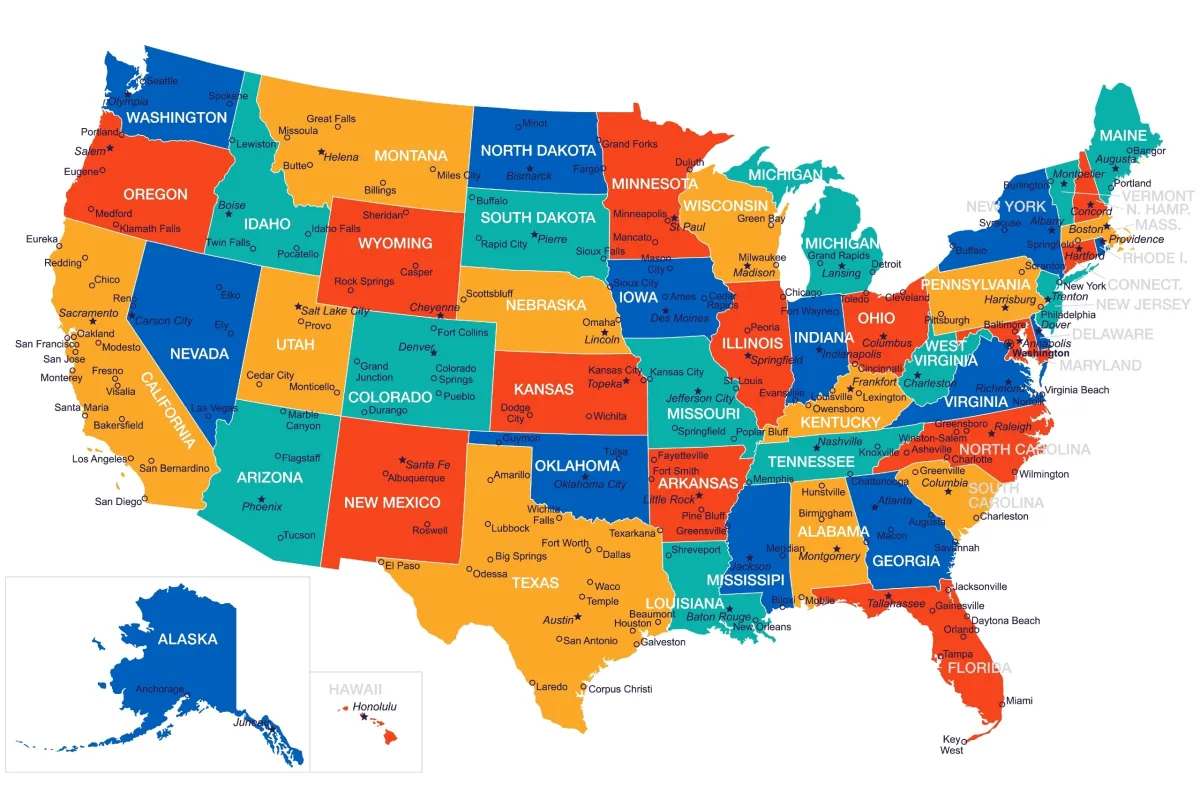 Photo: United States, via www.mappr.co
 Photo: Harvard Law School, via hls.harvard.edu
Where These Labels Actually Came From
Food date labeling in the US doesn't have a single origin story. It evolved piecemeal, driven more by retail logistics and manufacturer marketing than by food safety science.
In the early 20th century, most food was bought locally and consumed quickly. The concept of a printed expiration date barely existed. As the food industry scaled up and products began traveling longer distances through complex supply chains, retailers needed a way to manage inventory. "Sell By" dates emerged as a communication tool between manufacturers and stores — a signal for when a product should be pulled from shelves to maintain quality, not because it had become unsafe.
Consumers eventually started seeing these dates and drew their own conclusions. By the time manufacturers noticed that date labels were influencing purchasing decisions, the marketing opportunity was obvious. A "Best By" date subtly implies that a product is at its peak before that point — which is largely true — but it doesn't imply that the product becomes dangerous afterward. That distinction never made it onto the label.
Today, the only federally mandated food date label in the United States applies to infant formula. Everything else — the dates on your yogurt, your canned soup, your packaged deli meat — is governed by a patchwork of state regulations or no regulation at all. About 41 states have some form of date labeling law, but they don't agree on what the labels mean or which products require them. The result is a system where the same phrase can mean completely different things depending on what product you're reading it on and where you bought it.
What Each Label Is Actually Telling You
Sell By is almost entirely a retail management tool. It tells the store how long to display the product — not how long it's safe to eat. Most products are still perfectly good for days or even weeks after a "Sell By" date. Milk, for example, is typically safe to drink for five to seven days past its sell-by date if it's been stored properly. Eggs can last three to five weeks past theirs.
Best By (sometimes written as "Best If Used By") is a manufacturer's estimate of peak quality. This is about flavor, texture, and freshness — not safety. A box of crackers past its "Best By" date might be slightly less crisp. It is not going to make you sick. The same logic applies to most dry goods, canned foods, and many frozen items.
Use By is the closest thing to an actual safety indicator, and it's the label you should take most seriously. This date is typically applied to highly perishable items — fresh meat, ready-to-eat deli products, certain dairy items — where the manufacturer has determined that quality and safety genuinely decline around that time. Even here, proper storage matters enormously. A "Use By" date assumes the product has been handled and refrigerated correctly the entire time.
Freeze By is a newer label you'll start seeing more often. It's a suggestion for when to freeze a product to preserve quality — not a warning that the food is about to spoil.
The Foods You're Throwing Away Too Early
Some of the most commonly discarded foods past their dates are among the safest to keep eating.
Canned goods are notoriously misunderstood. The canning process creates a nearly sterile environment inside the can. Most canned foods are safe to eat for years past their printed date, assuming the can isn't damaged, rusted, or bulging. The date on canned soup or vegetables is almost entirely a quality estimate.
Hard cheeses can be trimmed if surface mold appears — the interior is typically unaffected. A block of cheddar doesn't become dangerous the day after its date stamp.
Dry pasta, rice, and dried beans have essentially indefinite shelf lives when stored in airtight containers away from moisture. The dates on these packages are nearly meaningless from a safety standpoint.
Frozen foods don't spoil in the traditional sense because freezing stops bacterial growth. Quality may decline over time (freezer burn is real), but a frozen chicken breast that's two months past its date isn't going to harm you.
Bread goes stale before it goes dangerous. Mold is the real indicator — and that's visible.
The Foods Where Dates Actually Matter
This isn't to say all dates are fiction. A few categories deserve genuine attention.
Fresh ground meat, poultry, and seafood are genuinely time-sensitive and should be used or frozen promptly. Ready-to-eat deli meats carry a risk of listeria growth in refrigerated environments over time, which is why their "Use By" dates carry more weight. Soft cheeses and unpasteurized products are also categories where the timeline matters more.
The pattern here is perishable, high-moisture, protein-rich foods — particularly ones that are eaten without cooking. Cooking kills most pathogens, which is why a slightly older steak that you're going to cook thoroughly is a different situation than sliced turkey you're eating cold straight from the package.
Why the Industry Hasn't Fixed This
The food industry has had opportunities to standardize date labels and has largely declined to do so. Ambiguous labels that consumers interpret as safety deadlines drive repeat purchases. If everyone believed their yogurt was unsafe after its "Best By" date, yogurt companies would sell more yogurt. The incentive structure doesn't reward clarity.
Some progress is happening. The Consumer Goods Forum, a global industry organization, has encouraged members to standardize around just two labels — "Best If Used By" for quality and "Use By" for safety — but adoption has been slow and voluntary.
The Honest Takeaway
Your nose and eyes are more reliable than most of the dates on your food. Spoiled food usually smells off, looks wrong, or has visible mold. When in doubt on a genuinely perishable item, trust your senses. But that can of chickpeas from 2022 sitting in the back of your pantry? It's almost certainly fine.