The January Detox Industry Sells You Something Your Body Is Already Doing for Free
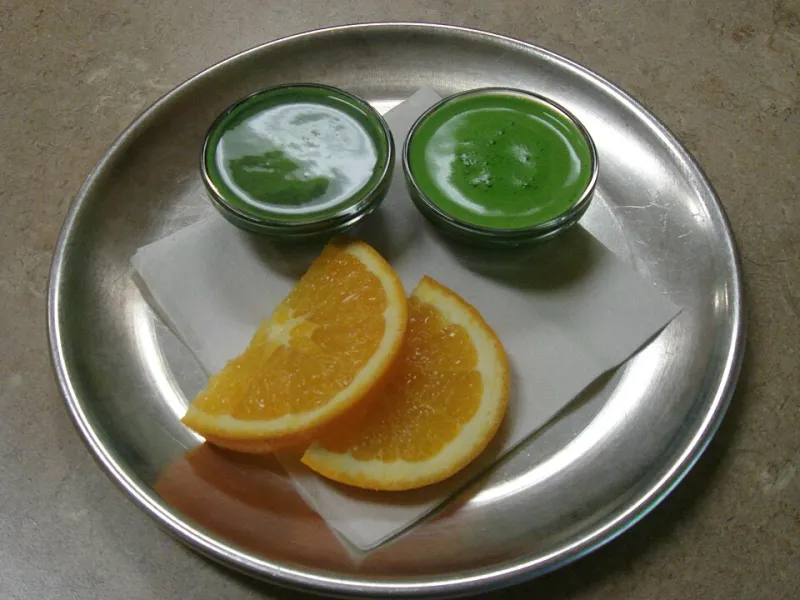
Photo: LukeHot at English Wikipedia, Public domain, via Wikimedia Commons
Sometime in the first week of January, the ads arrive. Juice cleanses. Detox teas. Three-day resets. Fourteen-day programs that promise to flush the holiday damage from your system and leave you feeling lighter, cleaner, and renewed. The language is vivid and consistent: your body has accumulated toxins, and it needs help getting rid of them.
It's a compelling story. It also has a fundamental problem.
What 'Detox' Actually Means in Medicine
In a clinical setting, detoxification is a real and serious process. It refers to the medically supervised management of withdrawal from substances like alcohol or opioids — a process that can be life-threatening without proper care. Toxicologists also use the word in a precise way, referring to the body's mechanisms for processing and eliminating genuinely harmful compounds that have entered the bloodstream.
What the wellness industry means by 'detox' is something else entirely. In the world of juice cleanses and herbal teas, the word is used as a general, vaguely threatening concept — the idea that everyday eating, holiday indulgence in particular, leaves behind a residue of harmful substances that your body cannot clear on its own without intervention.
When scientists have pushed supplement and cleanse companies to name the specific toxins their products are designed to eliminate, the answers tend to be evasive. Because naming a specific toxin would require demonstrating that it actually accumulates in the body at harmful levels after normal eating — and that the product in question actually removes it. Neither of those things is typically true.
What Your Liver and Kidneys Do Every Single Day
Here's the part the cleanse industry would rather you not think too hard about: you already have a detoxification system, and it runs continuously without any outside assistance.
Your liver is among the most sophisticated chemical processing units in the known world. It filters your entire blood supply multiple times per day, identifies compounds that need to be neutralized or broken down, converts fat-soluble substances into water-soluble ones so they can be excreted, and packages waste for removal. It does this for alcohol, for metabolic byproducts, for environmental compounds, and for the breakdown products of medications. It does not take holidays, and it does not need a three-day juice cleanse to get back on track after New Year's Eve.
Your kidneys filter roughly 200 liters of blood every day, removing waste products and excess minerals and sending them out through urine. Your lungs expel carbon dioxide. Your skin eliminates small amounts of waste through sweat. Your digestive system moves material through and out. The entire architecture of human physiology is, in a very literal sense, a continuous detoxification operation.
The idea that this system gets 'backed up' after a few weeks of rich food and extra wine — and that drinking cold-pressed celery juice for five days will clear the backlog — is not something toxicologists recognize as a real biological phenomenon.
How the Wellness Industry Built a Market Around a Metaphor
The cleanse and detox market didn't emerge from medical research. It grew from a combination of ancient purification rituals, early twentieth century fasting movements, and a very effective rebranding effort that accelerated in the 1990s and 2000s as the wellness industry expanded.
The word 'toxin' is doing a lot of heavy lifting in this marketing framework. It sounds scientific. It implies danger. And it's vague enough to be essentially unfalsifiable — if no one specifies what the toxin is, no one can prove it isn't there. Products are designed around solving a problem that is never clearly defined, which is a remarkably durable business model.
Social media amplified the cycle considerably. January detox content performs well because it aligns with the guilt and resolution energy that follows the holidays. Influencers and wellness brands have built entire content calendars around it. The more the message is repeated by people who appear healthy and credible, the more it feels like received wisdom rather than a marketing strategy.
What Actually Helps Your Body After the Holidays
None of this means that January isn't a reasonable time to recalibrate your habits. Eating more vegetables, drinking more water, cutting back on alcohol, and getting consistent sleep are all genuinely beneficial — but they're beneficial because of the direct effects of those behaviors, not because they 'detox' anything.
If you want to support your liver and kidneys, the evidence-based approach is straightforward: don't overload them chronically with alcohol, stay hydrated so your kidneys can do their filtering work efficiently, eat enough fiber to keep your digestive system moving, and avoid medications or supplements you don't actually need, since the liver has to process those too.
Interestingly, many expensive detox programs include ingredients or restrictions that can actually stress the liver rather than support it. Certain herbal compounds marketed as cleansing agents — like high-dose green tea extract or kava — are associated with liver injury in some cases. The irony is significant.
The Short Version
Your body is not a storage facility for holiday toxins. The organs responsible for filtering your blood and removing waste are working right now, and they were working through every cookie and glass of eggnog in December. The January detox industry sells a solution to a problem that your biology already solved — it just charges several hundred dollars for the privilege of believing otherwise.
Wanting to eat better in the new year is a perfectly good instinct. You just don't need to buy anything to do it.