That SPF Number on Your Moisturizer Isn't Doing What You Think It Is by Noon
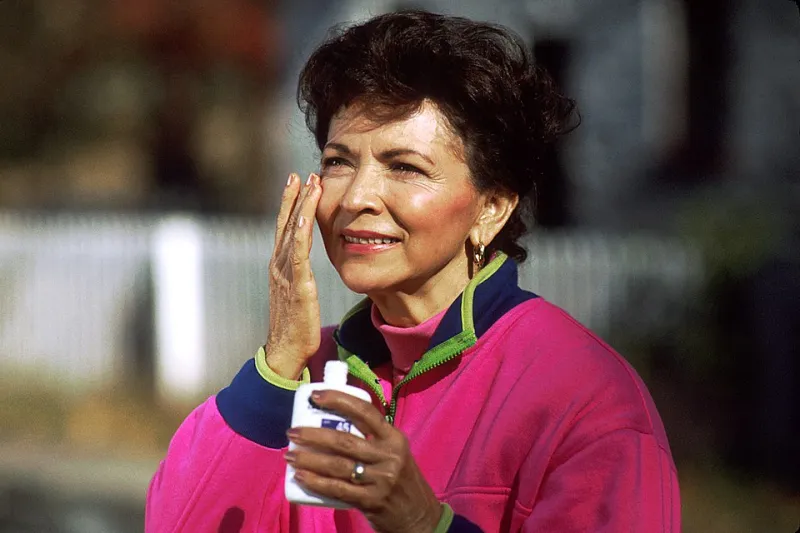
Photo: Bill Branson (photographer), Public domain, via Wikimedia Commons
That SPF Number on Your Moisturizer Isn't Doing What You Think It Is by Noon
The skincare aisle has made SPF feel almost effortless. Moisturizer with SPF 30. Foundation with SPF 20. BB cream with SPF 15. The promise is appealing: protect your skin from UV damage while doing something you'd be doing anyway. Millions of Americans have replaced dedicated sunscreen entirely with these combination products, treating the SPF number on their morning moisturizer as equivalent to the number on a tube of sunscreen.
Dermatologists have a consistent response to this assumption: it's not the same thing, and the difference matters more than most people realize.
This isn't a knock on SPF moisturizers as a category — they do provide some real protection, and wearing them is better than wearing nothing. But the way SPF numbers are tested, the way moisturizers are applied, and the way UV filters behave over time all conspire to create a gap between the number on the label and the protection you're actually getting on your face.
How SPF Numbers Are Determined
To understand the problem, you have to understand how the SPF rating system works — because it was designed under conditions that almost no one replicates in daily life.
The FDA requires SPF testing to be conducted using a specific application amount: 2 milligrams of product per square centimeter of skin. For the average adult face, that translates to roughly a quarter teaspoon of sunscreen applied to the face and neck. Most sunscreen users apply about 25 to 50 percent of that amount. Most moisturizer users apply considerably less.
SPF ratings aren't linear either. SPF 30 doesn't offer twice the protection of SPF 15. SPF 15 blocks about 93 percent of UVB rays. SPF 30 blocks about 97 percent. SPF 50 blocks about 98 percent. The differences between higher numbers are real but smaller than most people assume — and all of those numbers assume the full testing dose is applied evenly across the skin.
When you apply half the recommended amount, you don't get half the SPF. The protection drops more steeply than that. Research suggests that applying half the recommended dose can reduce effective protection to roughly the square root of the labeled SPF — meaning an SPF 30 product applied at half dose might deliver protection closer to SPF 5 or 6 in real-world conditions.
Why Moisturizer Application Makes the Problem Worse
Dedicated sunscreen is typically applied with sun protection as the explicit goal. People tend to be more deliberate about coverage. Moisturizer is applied with a different mindset — it's part of a skincare routine, layered with serum and primer and foundation, and the SPF component is almost incidental.
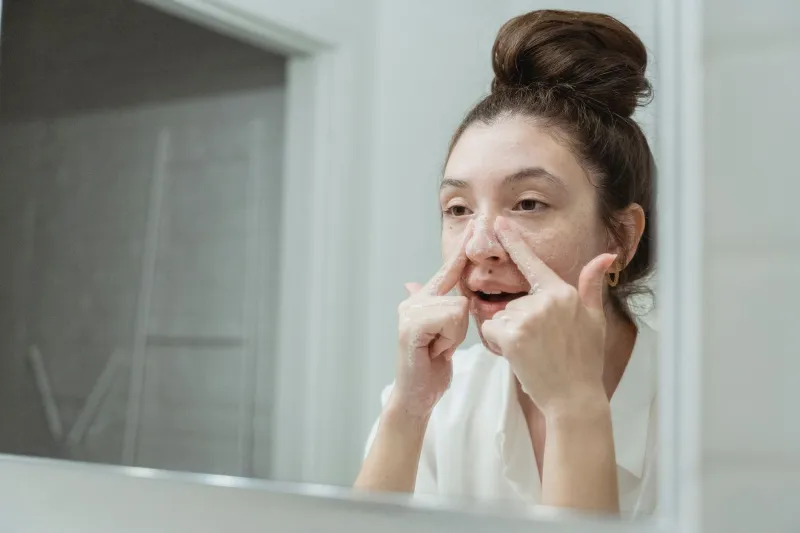
The application layer is thinner. Coverage is less even. And critically, most people apply moisturizer with their fingertips in gentle, circular motions that are optimized for absorption and feel — not for the uniform, complete coverage that SPF testing assumes.
There's also the layering issue. When SPF moisturizer goes on before primer, then foundation, then setting spray, each layer may dilute or disrupt the UV filter distribution in the moisturizer beneath it. The UV filters in these products are formulated to work as a standalone layer. Stacking other products on top isn't something the testing protocol accounts for.
The Reapplication Problem Nobody Talks About
The American Academy of Dermatology recommends reapplying sunscreen every two hours when outdoors, and after swimming or sweating. This recommendation exists because UV filters degrade with sun exposure and are removed by sweat and contact with clothing or hands.
 Photo: American Academy of Dermatology, via seekvectorlogo.com
Almost no one reapplies their SPF moisturizer at noon. The product was applied at 7 a.m. as part of a morning routine, and by the time you step outside for lunch, a midday walk, or an afternoon errand, whatever protection was there has diminished. Dedicated sunscreen users are at least somewhat aware of the reapplication expectation. People relying on SPF moisturizer often aren't thinking about it at all — because it doesn't feel like sunscreen. It feels like skincare.
This is where dermatologists say the real vulnerability lies. It's not that the morning application did nothing. It's that people assume it's still working hours later, in conditions it was never tested for.
What These Products Actually Do Well
None of this means SPF moisturizers are useless or that you should stop using them. For people who spend most of their day indoors near windows, an SPF moisturizer applied in the morning provides meaningful incidental protection against the UV exposure that comes through glass and during brief outdoor transitions. UVA rays — the ones primarily associated with premature aging and skin damage — penetrate windows, and having some UV filter in your daily routine is genuinely better than none.
For people with darker skin tones who are concerned about hyperpigmentation, or for those managing early signs of sun damage, an SPF moisturizer as part of a consistent daily routine adds up over time in ways that matter.
Dermatologists also point out that some people simply will not apply dedicated sunscreen every day. For those individuals, a product that combines moisturizer and SPF is a meaningful harm-reduction step — as long as they understand its limitations.
What Dermatologists Actually Recommend
For people who spend significant time outdoors, or who are managing concerns about skin cancer, photoaging, or melasma, dermatologists are consistent: a dedicated broad-spectrum sunscreen applied as a final skincare step (not mixed into or layered under other products) provides more reliable protection than SPF in a moisturizer.
For everyday use, the practical advice is layered: use an SPF moisturizer as your baseline, but don't treat it as equivalent to sunscreen if you're going to be outside for extended periods. Keep a powder SPF or a dedicated SPF product in your bag for reapplication. Pay attention to how much product you're actually applying.
The SPF number on a label represents a best-case scenario measured under controlled conditions. Real skin, real application habits, and real days don't look like a laboratory.
The Honest Takeaway
SPF moisturizers are a useful part of a daily routine, but they're not a substitute for dedicated sunscreen when meaningful sun exposure is involved. The number on the bottle was earned under conditions that don't match how most people actually use the product. Knowing that doesn't mean you need to overhaul your entire routine — it just means you should be realistic about what your morning lotion is and isn't doing by the time you head out for lunch.