Hand Sanitizer Became a Pandemic Symbol — But the Number on the Bottle Tells You Less Than You Think
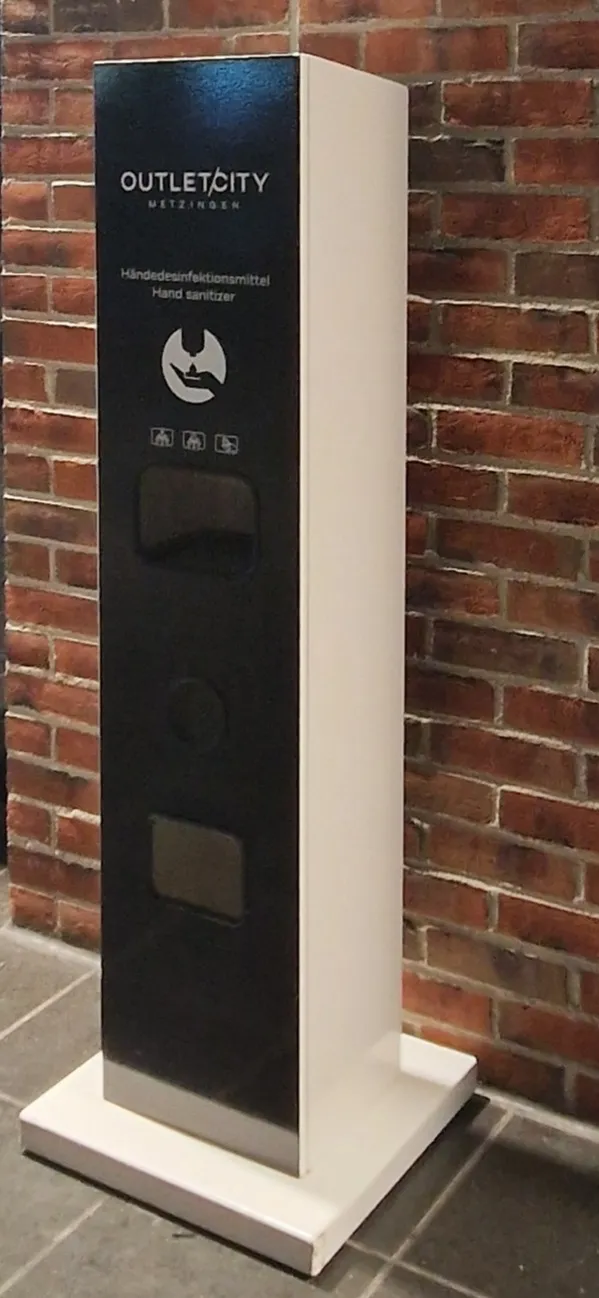
Photo: RealMetzor, CC0, via Wikimedia Commons
Hand Sanitizer Became a Pandemic Symbol — But the Number on the Bottle Tells You Think Less Than You Think
In the spring of 2020, hand sanitizer became one of the most fought-over products in America. People refreshed online carts, drove to multiple pharmacies, and paid absurd markups from resellers for small bottles of the stuff. And when they finally found it, many shoppers did the same thing: they checked the alcohol percentage and grabbed the highest number they could find.
The logic was intuitive. More alcohol, more germ-killing power. It's the same reasoning that makes people assume SPF 100 is twice as protective as SPF 50 (it isn't, but that's a different article). In the case of hand sanitizer, the intuition isn't just slightly off — it misses the point almost entirely.
Why the CDC and WHO Specify a Range, Not a Maximum
Both the Centers for Disease Control and Prevention and the World Health Organization recommend alcohol-based hand sanitizers with concentrations between 60 and 95 percent ethanol or isopropanol. That upper boundary is not a suggestion. It exists because pure or near-pure alcohol is actually less effective at killing microorganisms than a diluted formulation.
 Photo: World Health Organization, via logos-world.net
 Photo: Centers for Disease Control and Prevention, via www.drought.gov
The reason comes down to how alcohol disrupts pathogens. Ethanol and isopropanol kill bacteria and viruses primarily by denaturing their proteins — essentially unfolding the molecular structures that allow the organism to function. But this process works most efficiently in the presence of water. Water helps the alcohol penetrate the cell membrane or viral envelope and reach the structures it needs to disrupt.
At concentrations above roughly 90 to 95 percent, there isn't enough water in the formula to facilitate that penetration effectively. The alcohol essentially evaporates before it can do its job. A 70 percent ethanol solution, which sounds less potent than a 95 percent one, consistently outperforms it in laboratory kill-rate testing. This is not a minor footnote — it's the reason hospitals and clinical settings use 70 percent formulations as a standard, not the highest concentration available.
The Factor That Matters More Than Concentration
Even within the effective range, alcohol percentage is not the primary variable that determines whether hand sanitizer actually works in real-world use. Technique and contact time matter more.
Studies on sanitizer effectiveness in real-world settings consistently show that most people apply it incorrectly. The typical application involves a quick squeeze into one palm, a few rubs, and then the hands are considered clean. The problem is that this method leaves significant surface area uncovered. The CDC's recommended technique — which mirrors handwashing protocol — involves rubbing the product across all surfaces of both hands, including between fingers, around the thumbs, and along the backs of the hands, until the product has completely dried. That drying time, roughly 20 to 30 seconds of active rubbing, is when the alcohol is doing its work.
Skipping steps or wiping hands on clothing before the product dries reduces effectiveness significantly, regardless of whether you're using a 62 percent or an 80 percent formula.
The Germs That Hand Sanitizer Simply Cannot Touch
This is the part that almost never appears on product packaging, and it arguably should.
Alcohol-based hand sanitizer is highly effective against a broad range of bacteria and enveloped viruses — the category that includes influenza, coronaviruses, HIV, and hepatitis B and C. But it has meaningful limitations that consumers are rarely told about.
Norovirus, the highly contagious pathogen responsible for the stomach bugs that tear through cruise ships and school cafeterias every winter, is a non-enveloped virus. Its structure makes it substantially more resistant to alcohol. Studies have shown that hand sanitizer provides limited protection against norovirus transmission, which is one reason why healthcare facilities dealing with norovirus outbreaks often switch to soap and water protocols. Soap doesn't kill norovirus either, but the mechanical action of washing and rinsing removes it from the hands physically.
Cryptosporidium and Clostridioides difficile (C. diff) are two other pathogens that alcohol-based sanitizers cannot reliably eliminate. C. diff, which causes severe intestinal illness and is a serious problem in hospital settings, forms spores that are essentially impervious to alcohol. This is why hand hygiene guidelines in clinical settings are very specific about when sanitizer is appropriate and when soap and water is required — a distinction that is almost never communicated to the general public.
How a Useful Product Got Turned Into a Status Symbol
The pandemic created conditions where hand sanitizer became a proxy for safety and preparedness, which made the percentage number on the label feel like a meaningful metric of protection. Manufacturers responded by prominently featuring alcohol content in their marketing, and the higher-is-better assumption took hold broadly.
Some products that entered the market during the 2020 shortage were genuinely problematic — the FDA flagged dozens of brands for using methanol instead of ethanol, which is toxic and was causing poisoning cases. In that context, consumers checking labels carefully made sense. But the specific number became a marketing tool rather than a meaningful guide to effectiveness.
What You Actually Need to Know
For everyday use, any sanitizer that falls within the 60 to 95 percent alcohol range and is applied correctly will do its intended job against the pathogens it's designed to address. The difference between a 65 percent and an 80 percent formulation in real-world use is negligible — what matters is whether you're using enough product and giving it time to work.
For norovirus season, stomach bugs going around your kids' school, or hospital visits: wash your hands with soap and water. The sanitizer on the wall dispenser is not going to cover you for everything.
The bottle with the biggest number isn't the most powerful one. It's just the one with the biggest number.